Helsinki Bus · Real-time Navigation
I pitched this self-initiated project to Helsinki Transit.
It changed how they approach design for internationals.
I led Research, Design, Strategy with 3 Helsinki Transit Designers in 4 months.

Context
Helsinki wants public transit as the #1 way to get around by 2050.
But the transit system doesn’t account for everyone yet.
Internationals Fall Behind
Problem
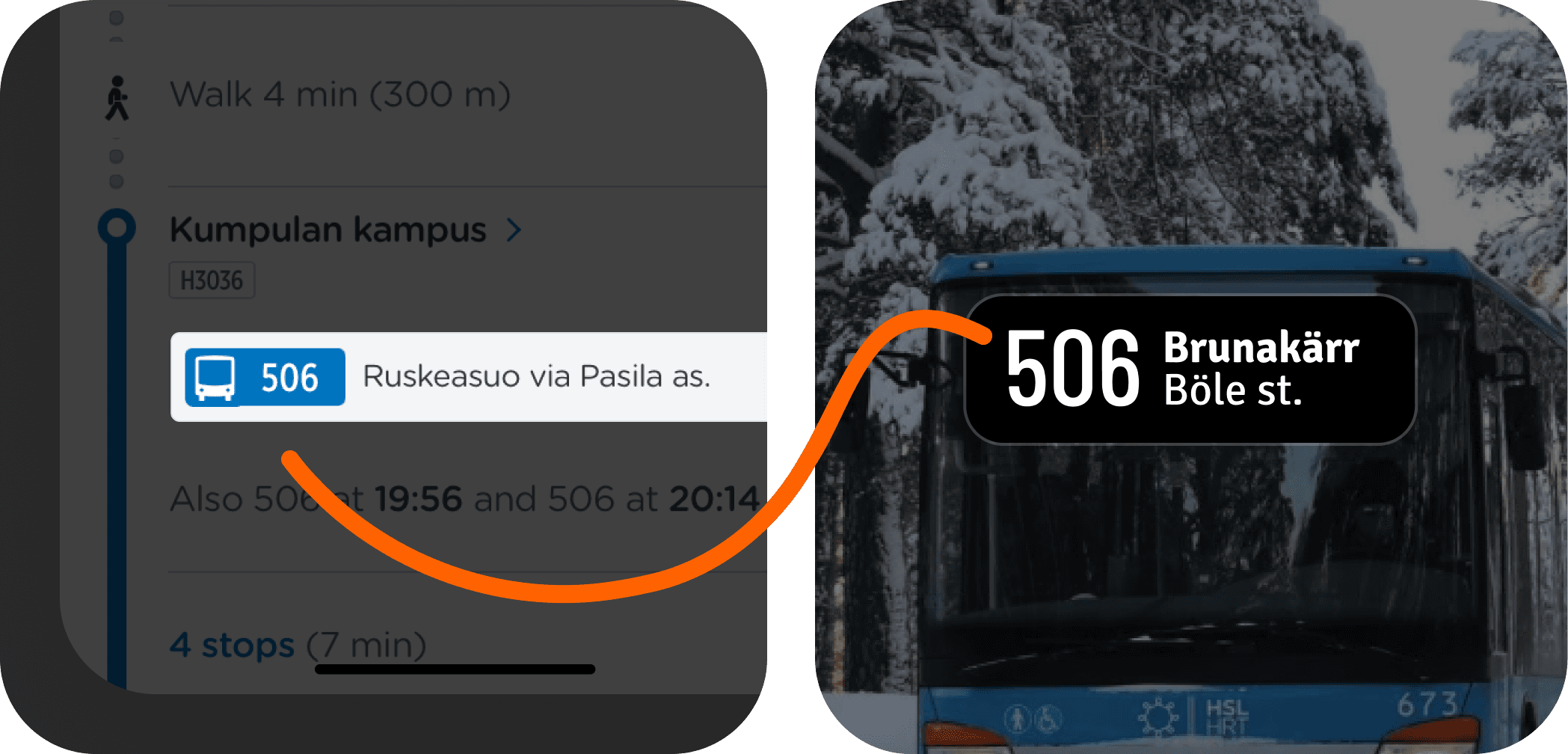
Internationals miss buses because of language confusion.
Signage switches between 2 languages: Finnish and Swedish.
About 20% of Helsinki’s population doesn’t understand either.


Finnish

Swedish
Key Insight
But the issue isn’t translation. It’s timing.
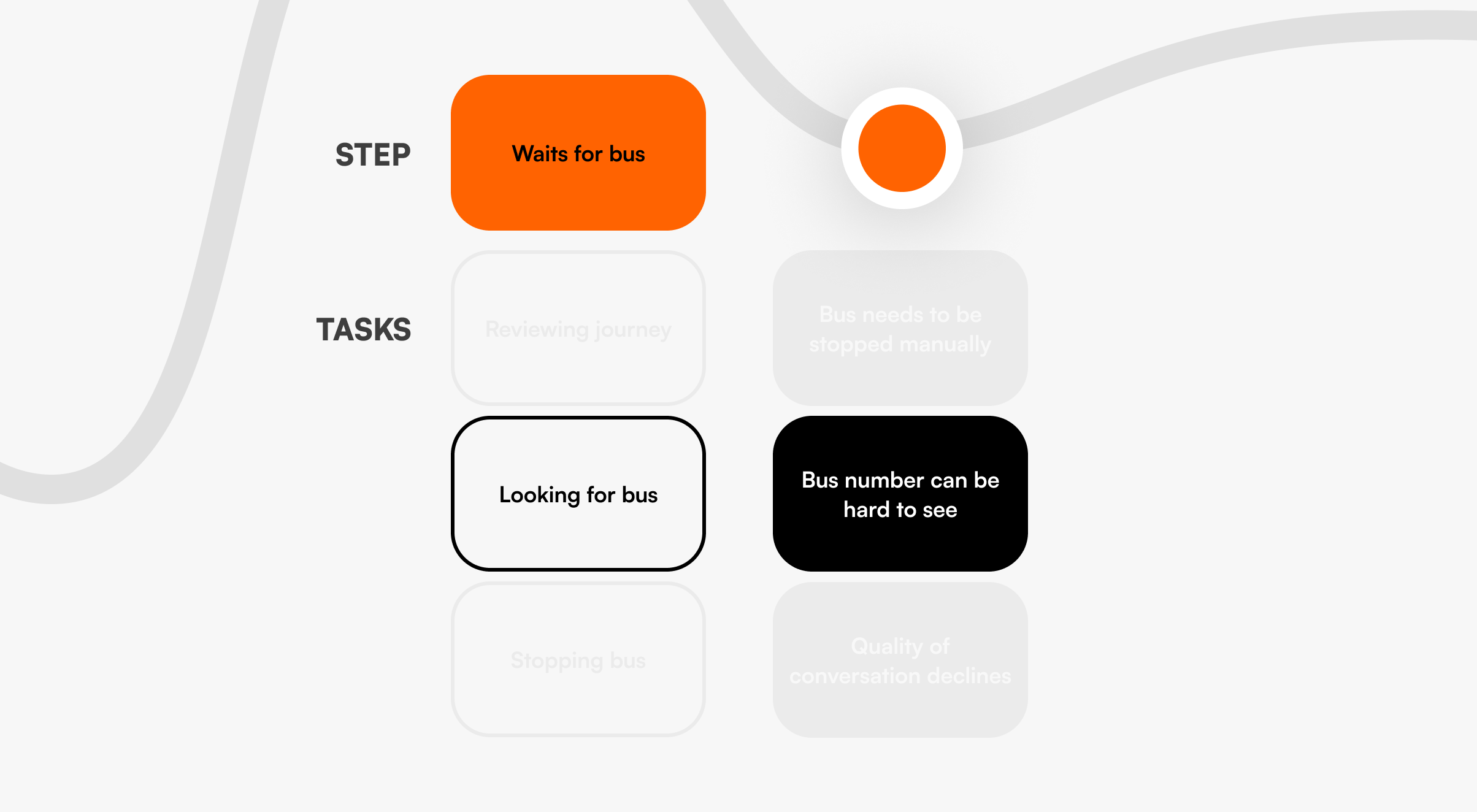
I mapped the end-to-end service journey through
field ethnography to find out where confusion happened and how the existing system communicates.
step
tasks
Waits for bus
Bus number can be hard to see
Bus needs to be stopped manually
Quality of conversation declines
Reviewing journey
Looking for bus
Stopping bus
From Service Map
Opportunity
So information should adapt to where people are in their journey.
What if, instead of showing more information only the right information is shown exactly when it’s needed?


Start navigation
current
new
Approach
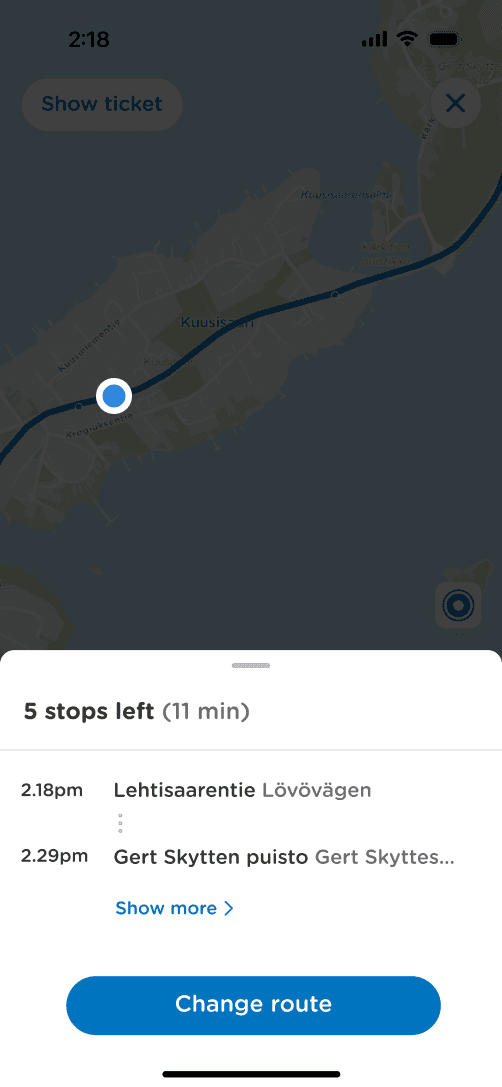
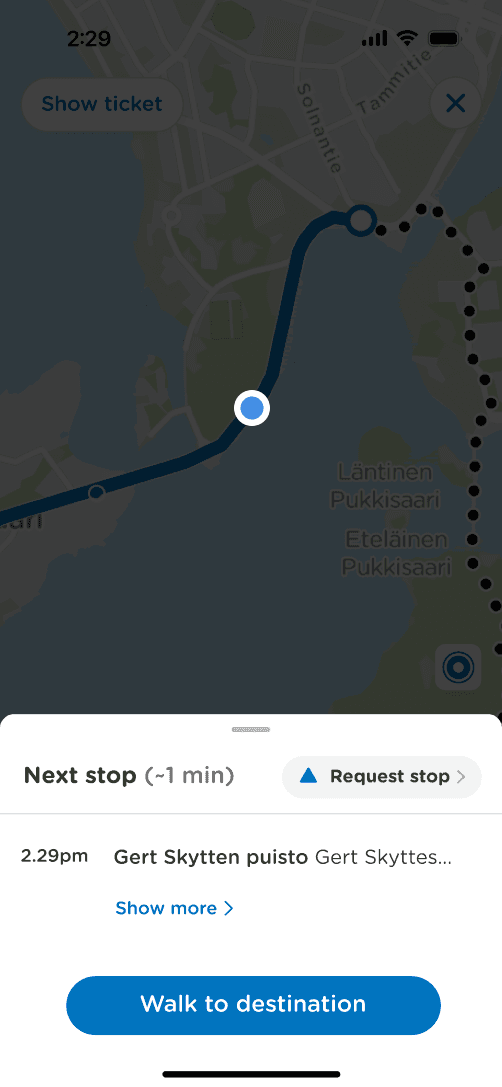
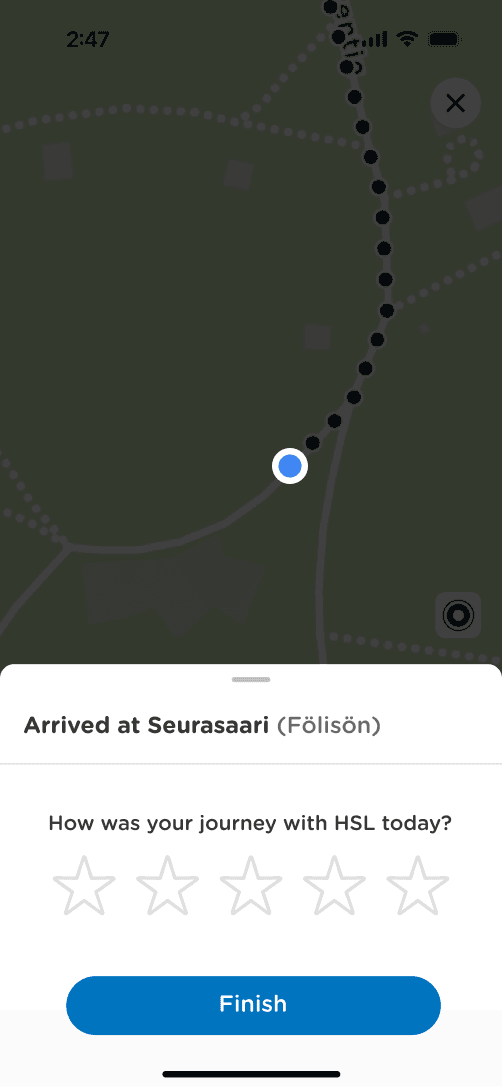
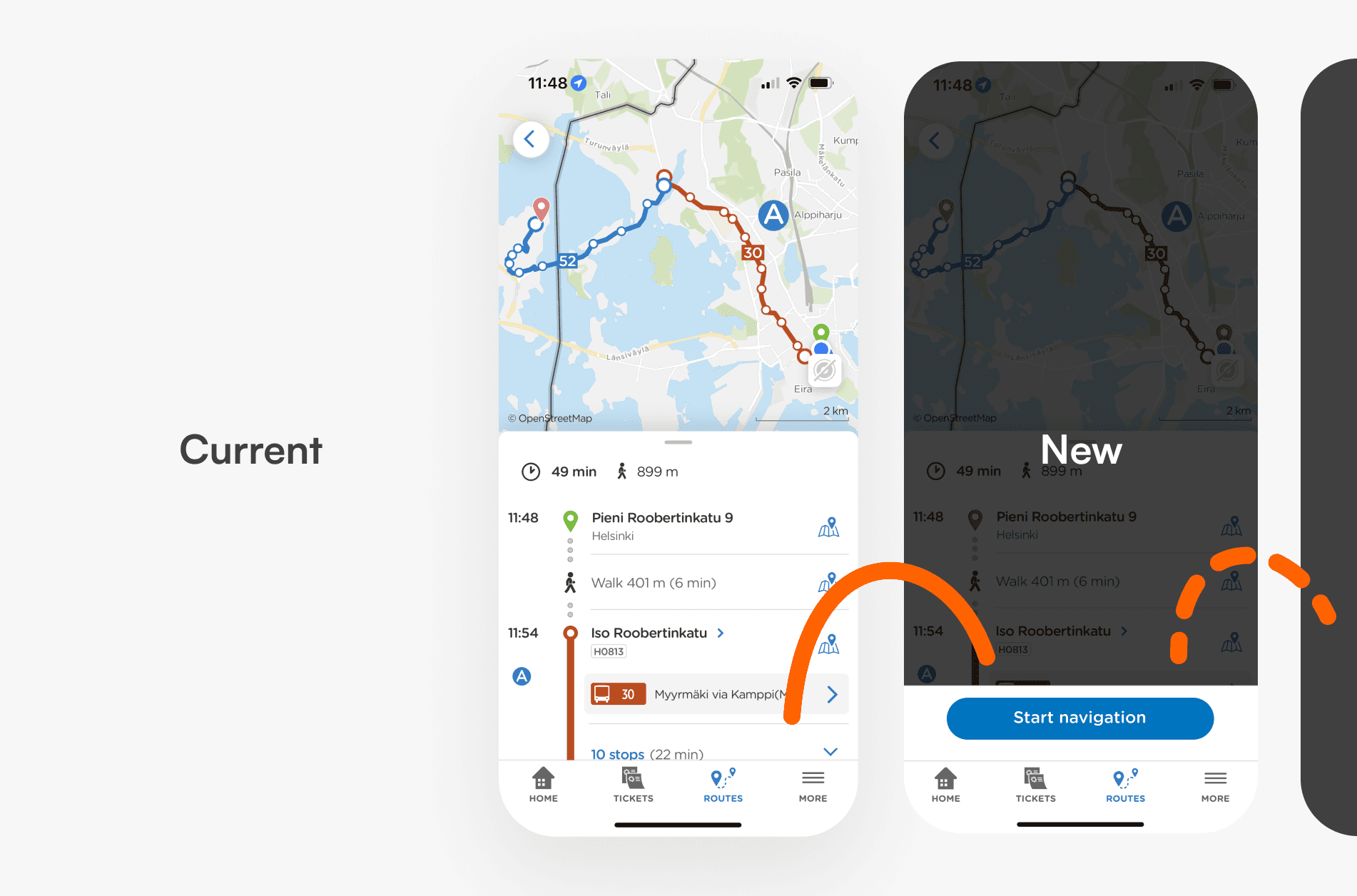
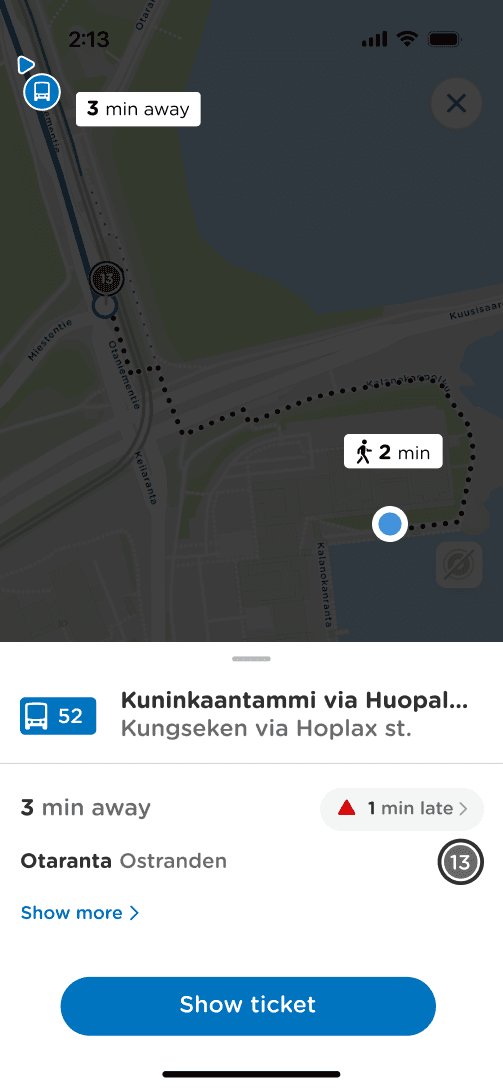
Shifting from static to real-time navigation.
Introducing a new navigation flow after people plan and select their route.


2 min
3 min away
Share journey status
52
Kuninkaantammi via Huopalahti as.
Kungseken via Hoplax st.
Otaranta
Ostranden
13
Show ticket
3 min away
1 min late
Show more
2:13
Waiting

Riding

Stop

Destination
Challenge
But real-time navigation also means real-life chaos.
Considering human factors and the not so happy path to design for realistic experiences, not ideal ones.
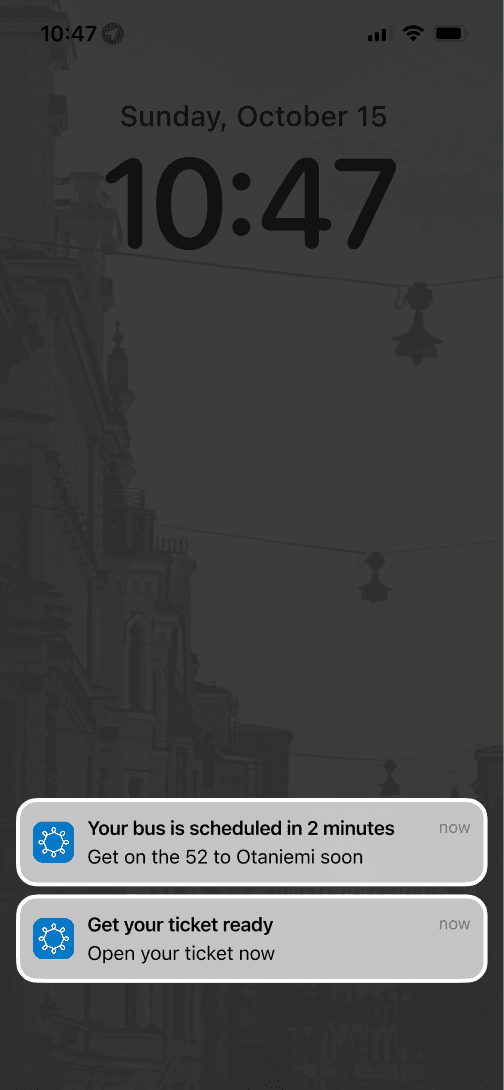
Sunday, October 15
10:47


Get your ticket ready
now
Open your ticket now

Your bus is scheduled in 2 minutes
now
Get on the 52 to Otaniemi soon
Low battery
Lite version via notifications
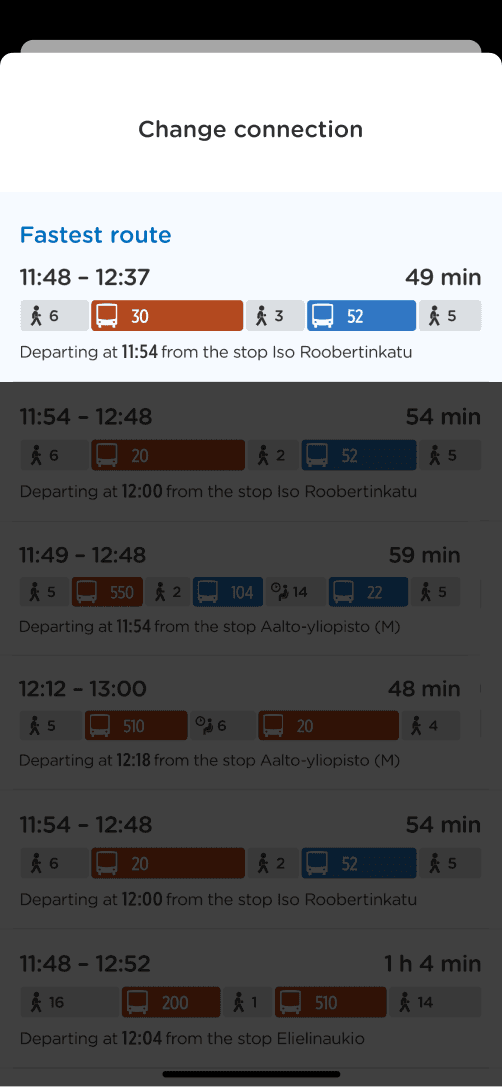


Fastest route


Change connection
Route changes
Missed buses and new plans
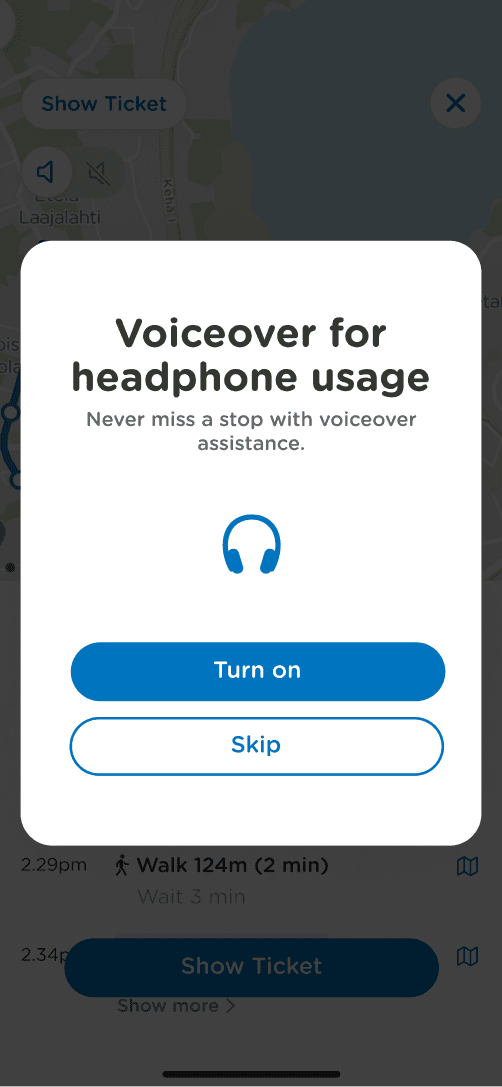
Show Ticket
Walk 124m (2 min)
Show more
Wait 3 min
Aalto-yliopisto (M) Aalto-universitätet (M)
Keilaniemi Kägnes
2.29pm
2.18pm
2.29pm
2.34pm
5 more stops (11 minutes)
52
Otaniemi
Otnäs
Show Ticket
Voiceover for headphone usage
Never miss a stop with voiceover assistance.
Turn on
Skip
Motion sickeness
Eyes-free updates
Product Thinking
And real-life implementation needs bite-sizing.
Breaking down the product into meaningful, testable steps to build a robust system.
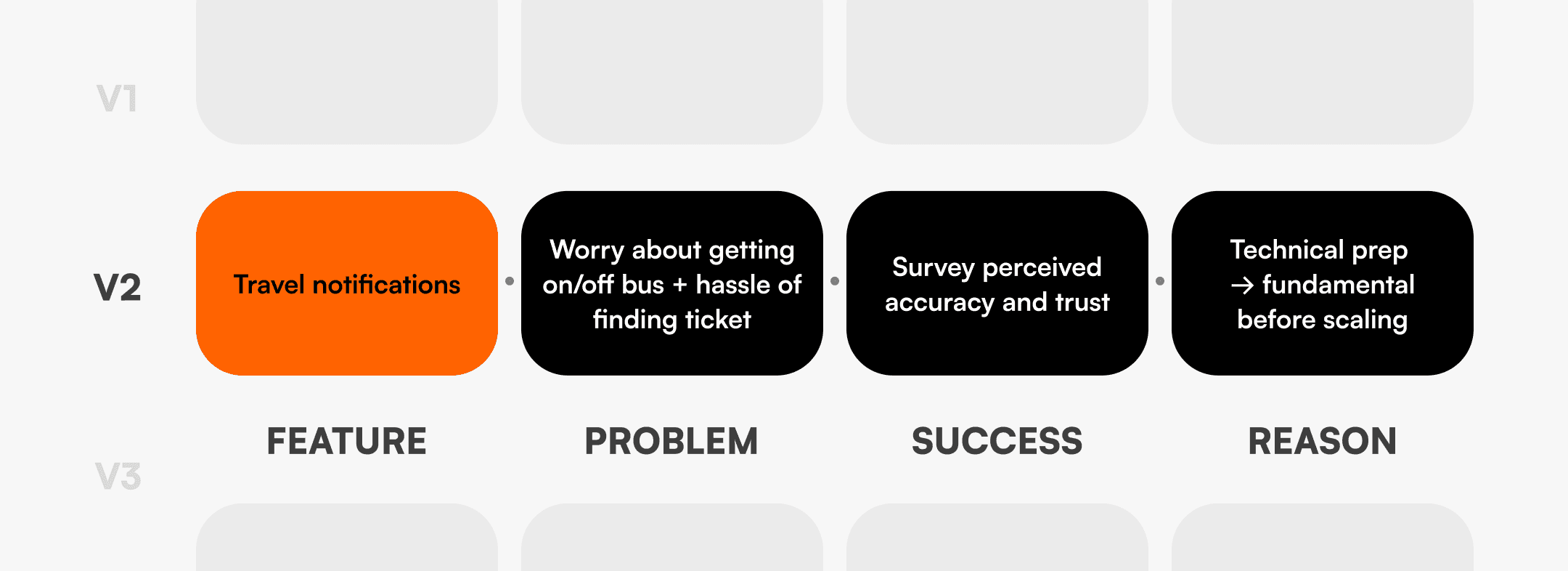
Travel notifications
Worry about getting on/off bus + hassle of finding ticket
Survey on perceived accuracy and trust
Technical prep → fundamental before scaling
V2
V1
V3
feature
problem
success
reason
Travel notifications
Worry about getting on/off bus + hassle of finding ticket
Survey perceived accuracy and trust
Technical prep
→ fundamental before scaling
Phasing
Handoff
I pitched this unsolicited to Helsinki Transit.
“We haven’t considered language barriers before. This is instrumental in supporting in-transit experiences.” ”
- Helsinki Transit Designers

1
2
3
4
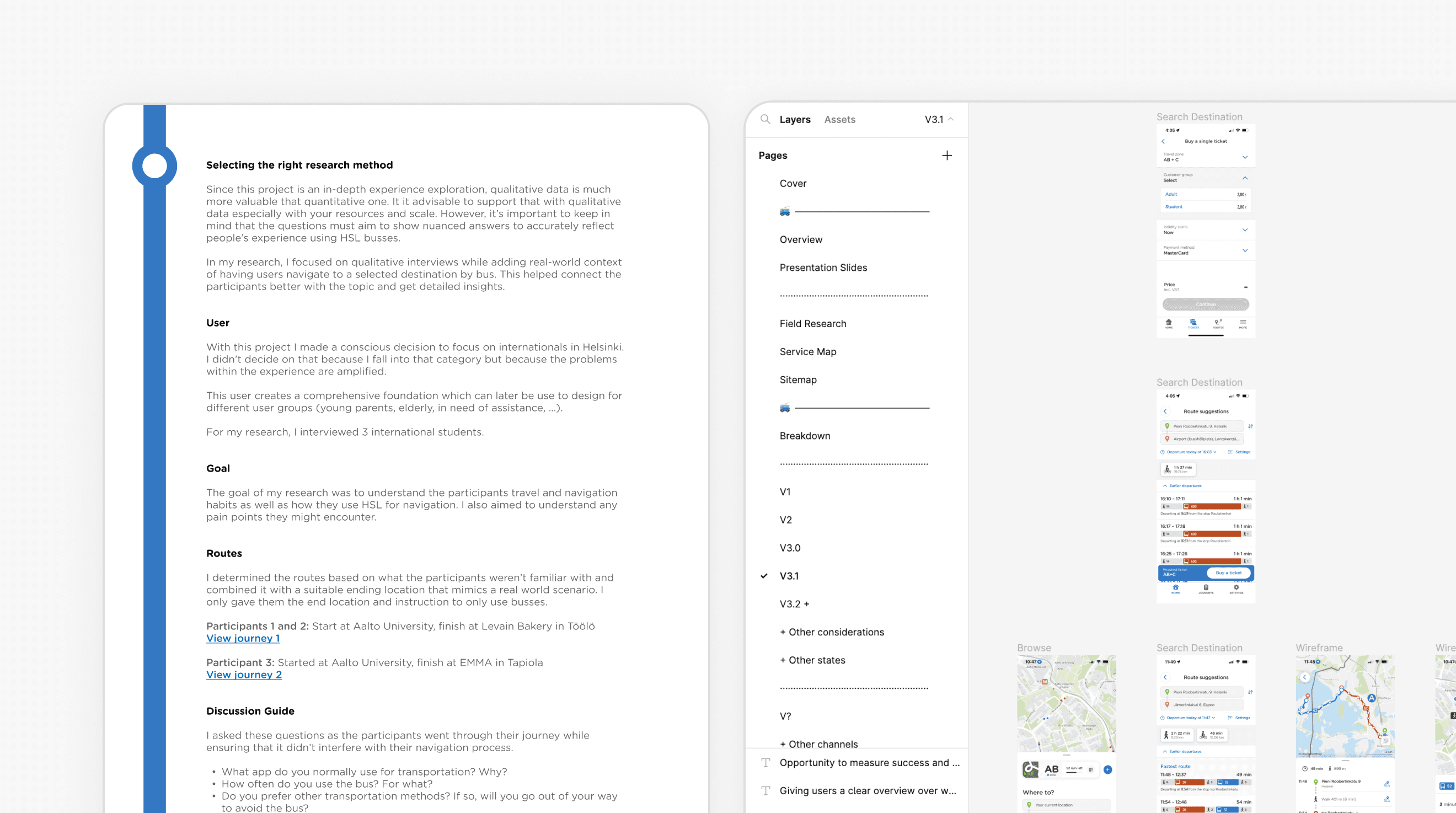
Selecting the right research method
Since this project is an in-depth experience exploration, qualitative data is much more valuable that quantitative one. It it advisable to support that with qualitative data especially with your resources and scale. However, it’s important to keep in mind that the questions must aim to show nuanced answers to accurately reflect people’s experience using HSL busses.
In my research, I focused on qualitative interviews while adding real-world context of having users navigate to a selected destination by bus. This helped connect the participants better with the topic and get detailed insights.
User
With this project I made a conscious decision to focus on internationals in Helsinki. I didn’t decide on that because I fall into that category but because the problems within the experience are amplified.
This user creates a comprehensive foundation which can later be use to design for different user groups (young parents, elderly, in need of assistance, …).
For my research, I interviewed 3 international students.
Goal
The goal of my research was to understand the participants travel and navigation habits as well as how they use HSL for navigation. I also aimed to understand any pain points they might encounter.
Routes
I determined the routes based on what the participants weren’t familiar with and combined it with a suitable ending location that mimics a real world scenario. I only gave them the end location and instruction to only use busses.
Participants 1 and 2: Start at Aalto University, finish at Levain Bakery in Töölö
View journey 1
Participant 3: Started at Aalto University, finish at EMMA in Tapiola
Questions
I asked these questions as the participants went through their journey while ensuring that it didn’t interfere with their navigation process.
What app do you normally use for transportation? Why?
How often do you use the bus? For what?
Do you prefer other transportation methods? If so, will you go out of your way to avoid the bus?
Do you travel alone or with people?
What do you usually do during a bus ride?
Do you get motion sick? How does this affect your experience? What do you need to do when you do?
Do you perceive a language barrier? How does it affect your bus travel experience?
How has bus travel been when you first came to Finland? Has this changed since then?
Research Report and Design File
Impact
Government changes halted implementation but the framework stuck.
Now, transit designers consider those who don't speak Finnish, reshaping design for 200k+ daily riders around inclusivity.
Please check desktop for the full portfolio